
Healthcare and disability services · August 12, 2026 · 5 min read
Interactive wall in a nursing home: how a session actually runs
A session on an interactive wall needs no controller, no headset and no individual screen. Here is how it actually runs in a nursing home, from plugging it in to the end of the activity.
Before the session: a power outlet is enough
The system works without Wi-Fi. Every activity is built into the unit: staff plug it in, switch it on and start the activity. A permanently installed K-Station keeps the room ready at all times. A K-Mobile takes about five minutes to set up, with no tools required.
The projected image measures two to four metres wide. It is adjusted to fit the room: dining hall, activity room, wide corridor or physiotherapy room.
During the session: the gesture is the only control
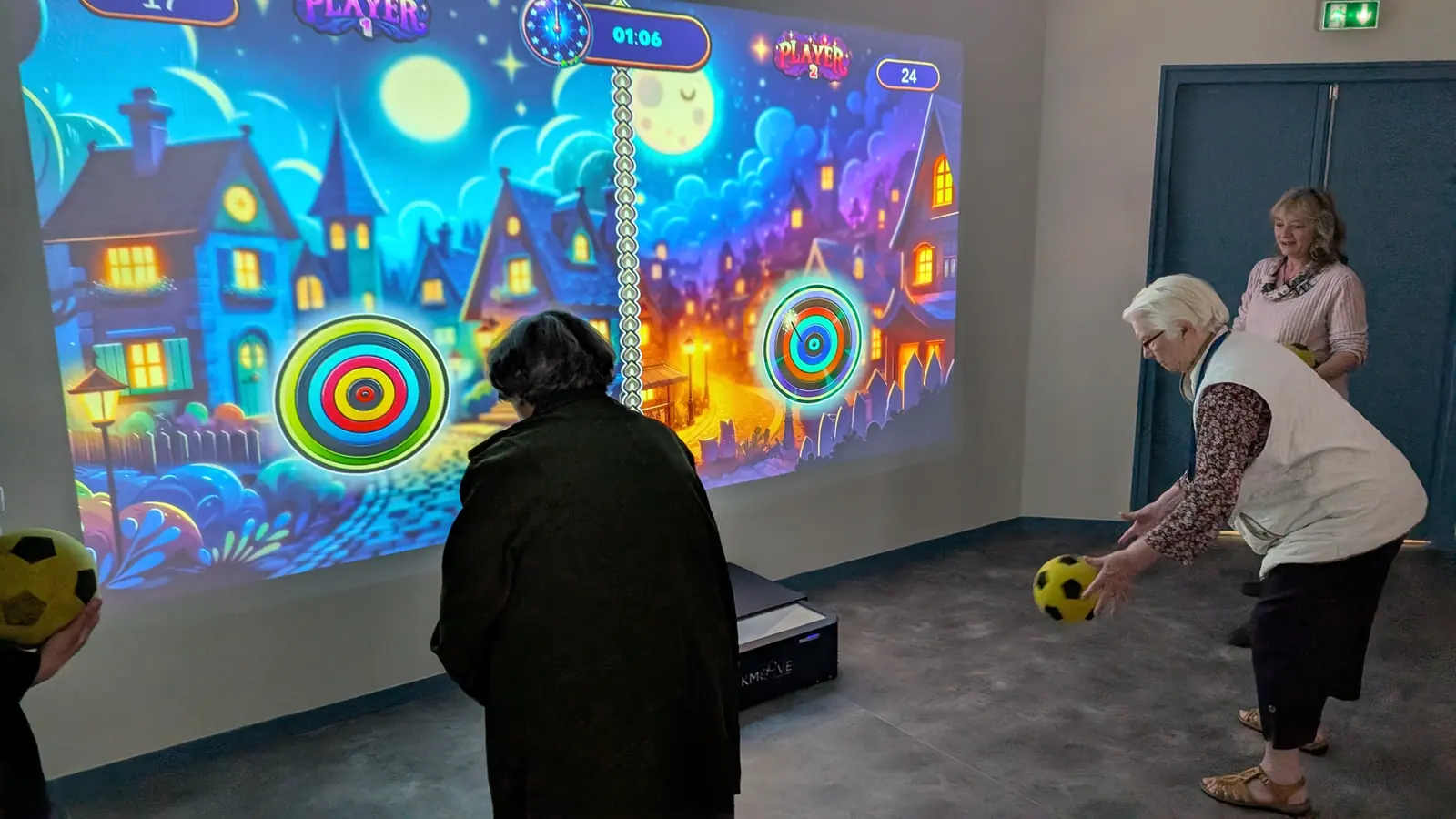
Residents touch the wall, throw a foam ball or wave a hand in front of the surface. The sensor detects up to twenty simultaneous contact points, so several people can play at the same time without waiting for their turn.
Standing, seated on a chair or in a wheelchair, everyone joins the same activity. The activity leader adjusts the image height and the game difficulty to suit the group.
- Laser detection by default: no image of participants is ever recorded. The K-motion camera remains an option, activated only if you choose it
- Up to five simultaneous players and sixteen in relay
- Activities focused on dexterity, motor skills, coordination and letter or number games
After the session: personalising it for next time
On versions with Editor mode, staff can replace the images and words used in the games with their own content: photos of the facility, local memories, vocabulary from a workshop. Preparation takes a few minutes and requires no technical skill.
Featured models
Ready to see the interactive wall in your facility?
Request a quote and we will get back to you within 48 hours with configuration and pricing.