Interactive wall for disability services and special education facilities
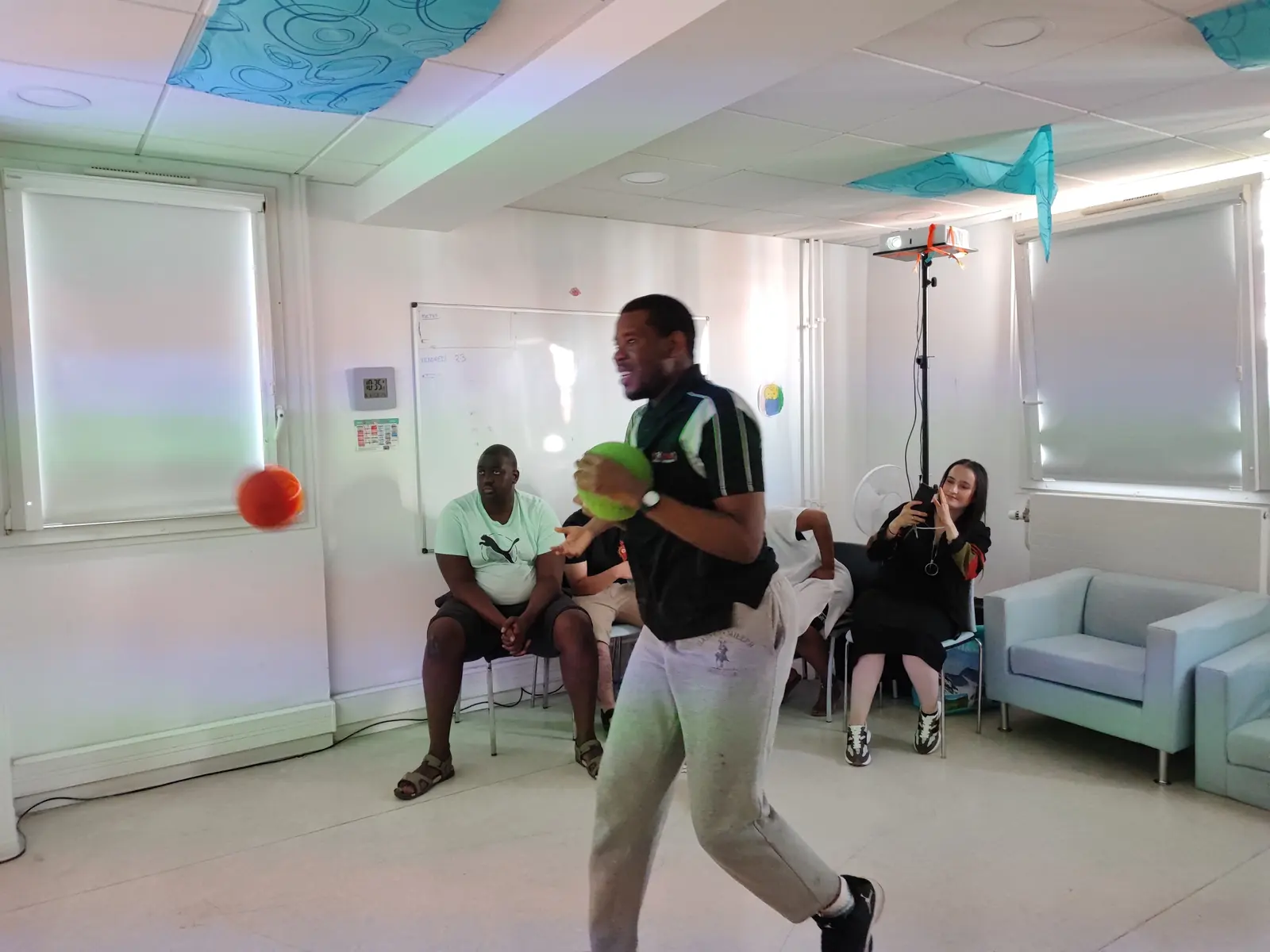
No controller to hold, no fine motor gesture required: the wall reacts to a hand, a body or a ball. Professionals calibrate the surface, speed and target size for each person, including those with autism, ADHD, learning differences or intellectual, motor or psychological disabilities.
No controller, no fine motor gesture required: the wall reacts to a hand, a body or a ball. Professionals calibrate the surface, speed and target size to each person's profile, including autistic participants, those with ADHD, learning differences, or intellectual, motor and psychological disabilities.
What it changes day to day
Full accessibility
Individualized goals
Adjustable stimuli
Simple tracking
How teams use the wall
- Motor skills, occupational therapy and rehabilitation sessions
- Work on spatial awareness, lateralization and body schema
- Communication workshops, turn-taking and joint attention
- Supervised physical release time, with no hazardous equipment
Real deployments
In special education and disability services, the point is simple: the interface disappears, leaving only the movement you want to work on.
Working on a goal from the individual support plan
Special education facility for children and teenagers
Coordination and spatial awareness exercises were done at a table, with motivation dropping after a few minutes.
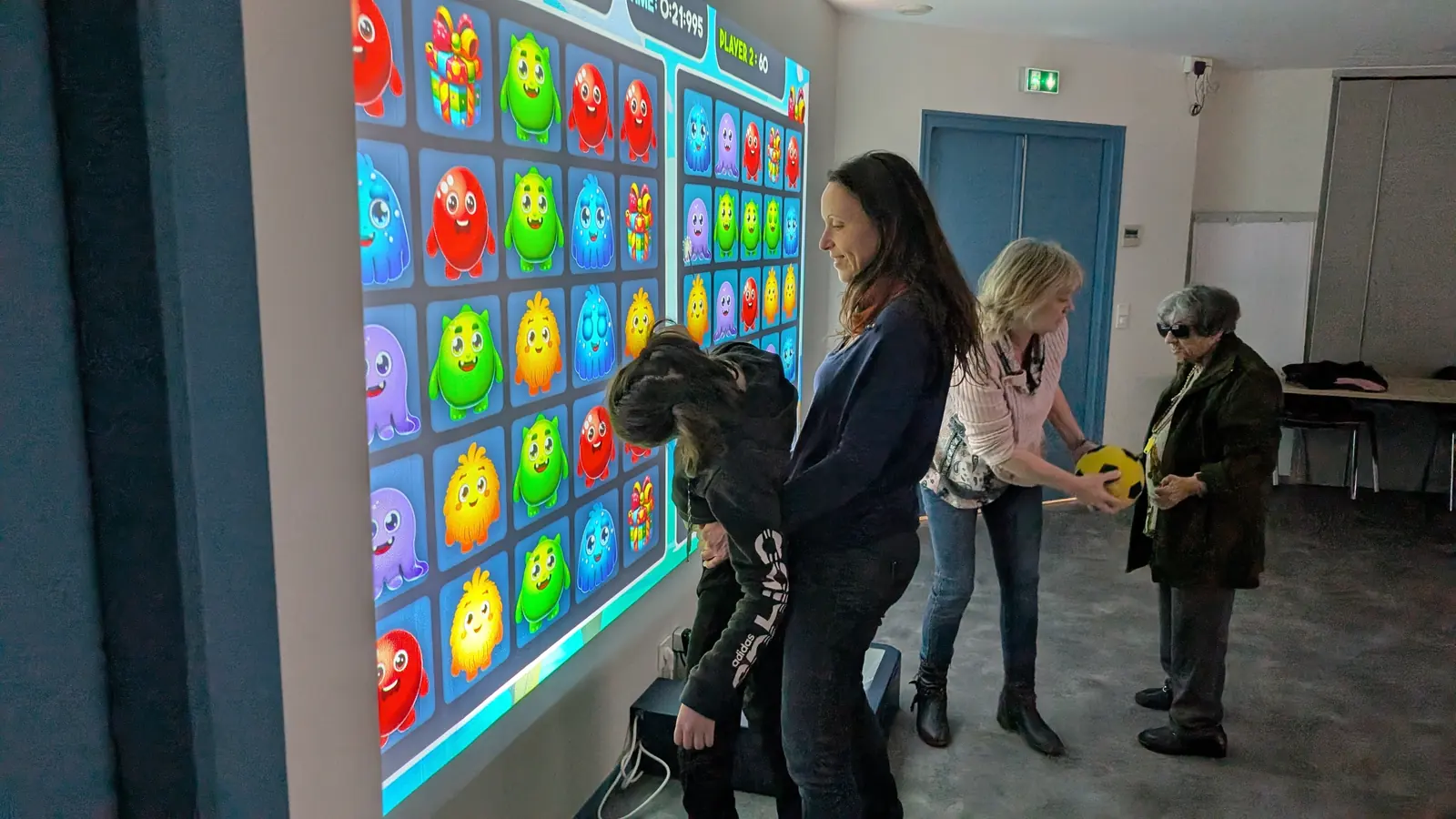
A K-Station E with Editor mode: each professional builds a game around a specific goal, with targets sized to the individual's profile.
- The same exercise adjustable for each young person, with no need to change materials
- Longer motor skills and occupational therapy sessions
- Turn-taking and small-group cooperation practised in the same session
Supervised release time, with no hazardous equipment
Sheltered workshop and residential facility
End-of-day free time lacked a physical activity that everyone could take part in indoors.
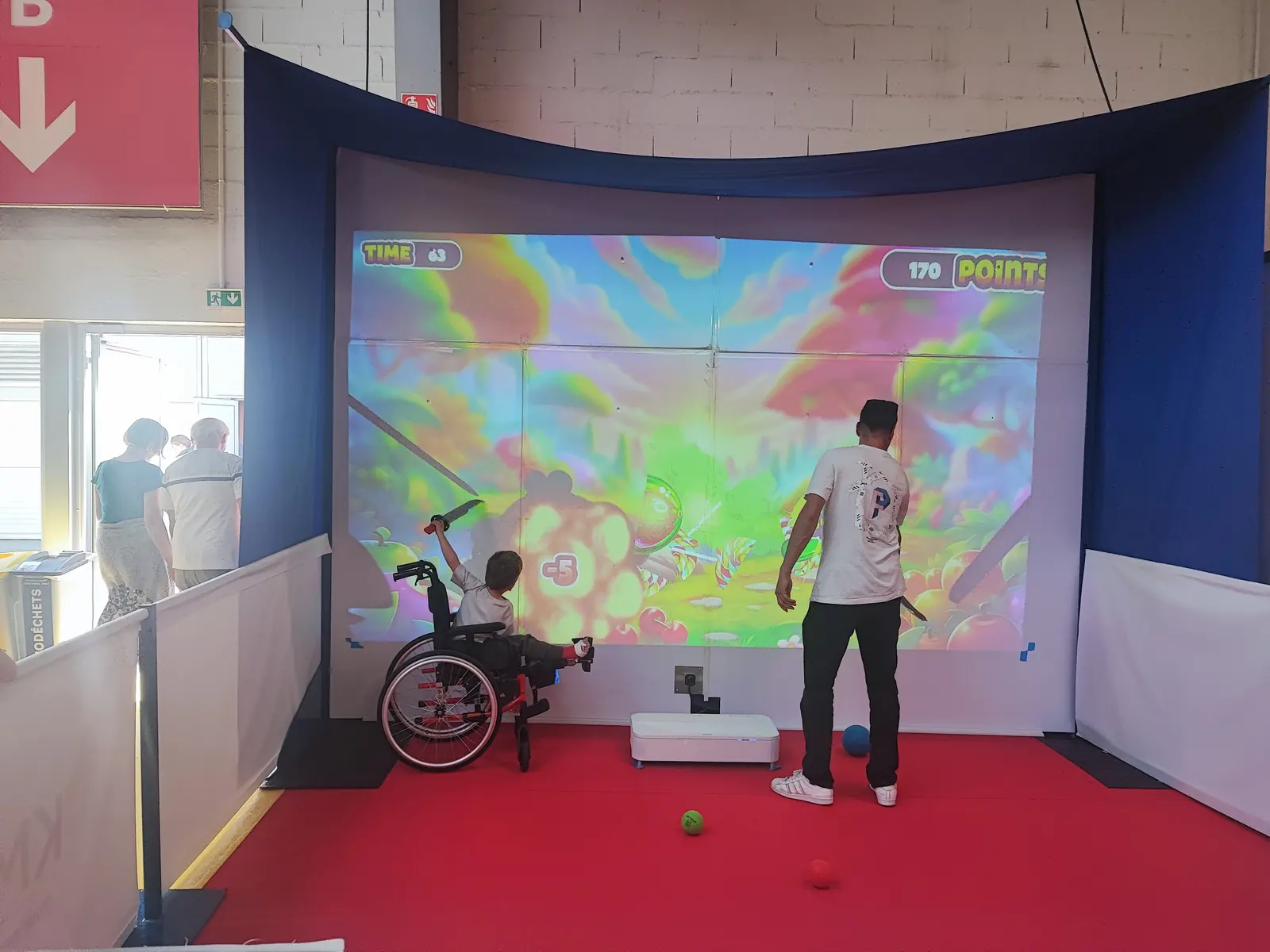
A K-Mobile moved between the residence and the workshop, set up on a light-coloured wall in five minutes.
- An activity accessible standing, seated or in a wheelchair
- No heavy object or individual equipment to manage
- The same system used on two sites during the week
I was quite struck by a young man with significant difficulties with joint attention. During the game, he stayed focused for thirty seconds. It was the first time in several years that I had seen him show that level of attention.
An innovative technology that lets our young people take part in sport in a motivating and playful way. We set up sessions with different skill levels: everyone finds something they enjoy.
Questions we hear from teams like yours
- Is the interactive wall suitable for autistic people?
- Yes, with the right settings. Sound can be turned off, visual stimuli simplified, and speed and the number of targets reduced. Many teams use it to work on turn-taking and joint attention.
- Can a game be built around a goal from the individual support plan?
- Yes. Editor mode lets you build custom content: everyday images, pictograms, simple instructions, lateralization or spatial awareness exercises.
- How can progress be tracked?
- Scores, durations and successes show on screen and are easily reported in support reviews, with no personal data collected by the system.
- Is it suitable for non-verbal autistic children?
- Yes. No verbal instruction is required: the child understands the game by seeing the target react to their movement. Sound can be turned off, stimuli simplified, and everyday pictograms added through Editor mode, making it a support for joint attention and turn-taking.
- Can it be used in a sensory or Snoezelen room?
- Yes, by setting content to a calming mode: soft colours, slow pace, no score, no sound. The light projection on a light-coloured wall complements the sensory space, with a laser sensor that does not film.
- From what age can the interactive wall be used?
- From early childhood, around age three, with cause-and-effect games and large targets, up to adults supported in specialised residential and work settings. Target size, speed and projection height adjust to the profile.
- What funding options exist for disability service providers?
- Facilities may draw on their investment budget, one-off health authority grants, regional calls for projects, foundations and sponsors, or the funds of a managing association. No mandatory subscription adds to the file, which simplifies the application.
Tell us about your facility
Send us your room size, your audience and your timeline. We reply with a detailed quote within 48 hours.