Interactive wall for hospitals and rehabilitation care
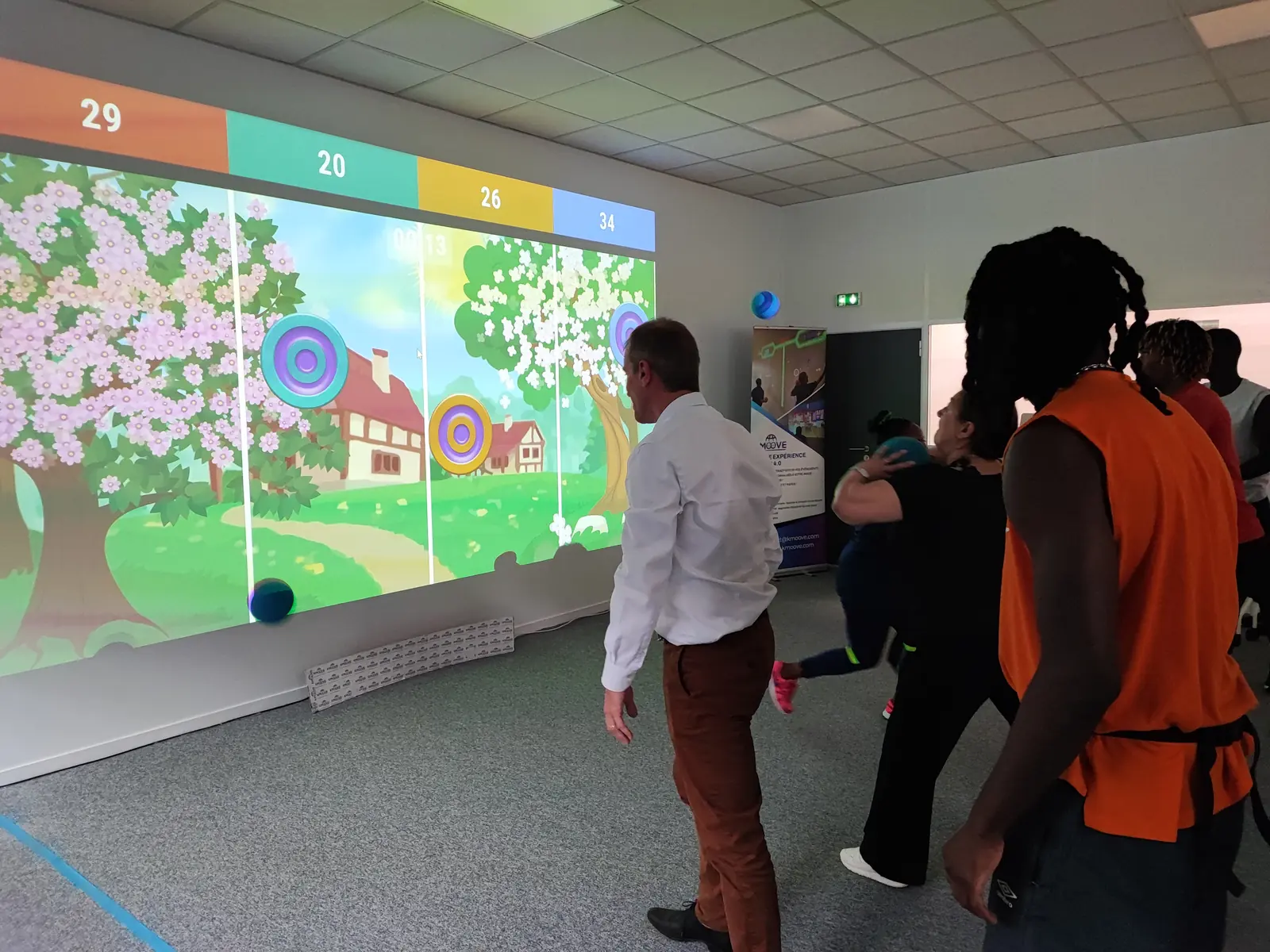
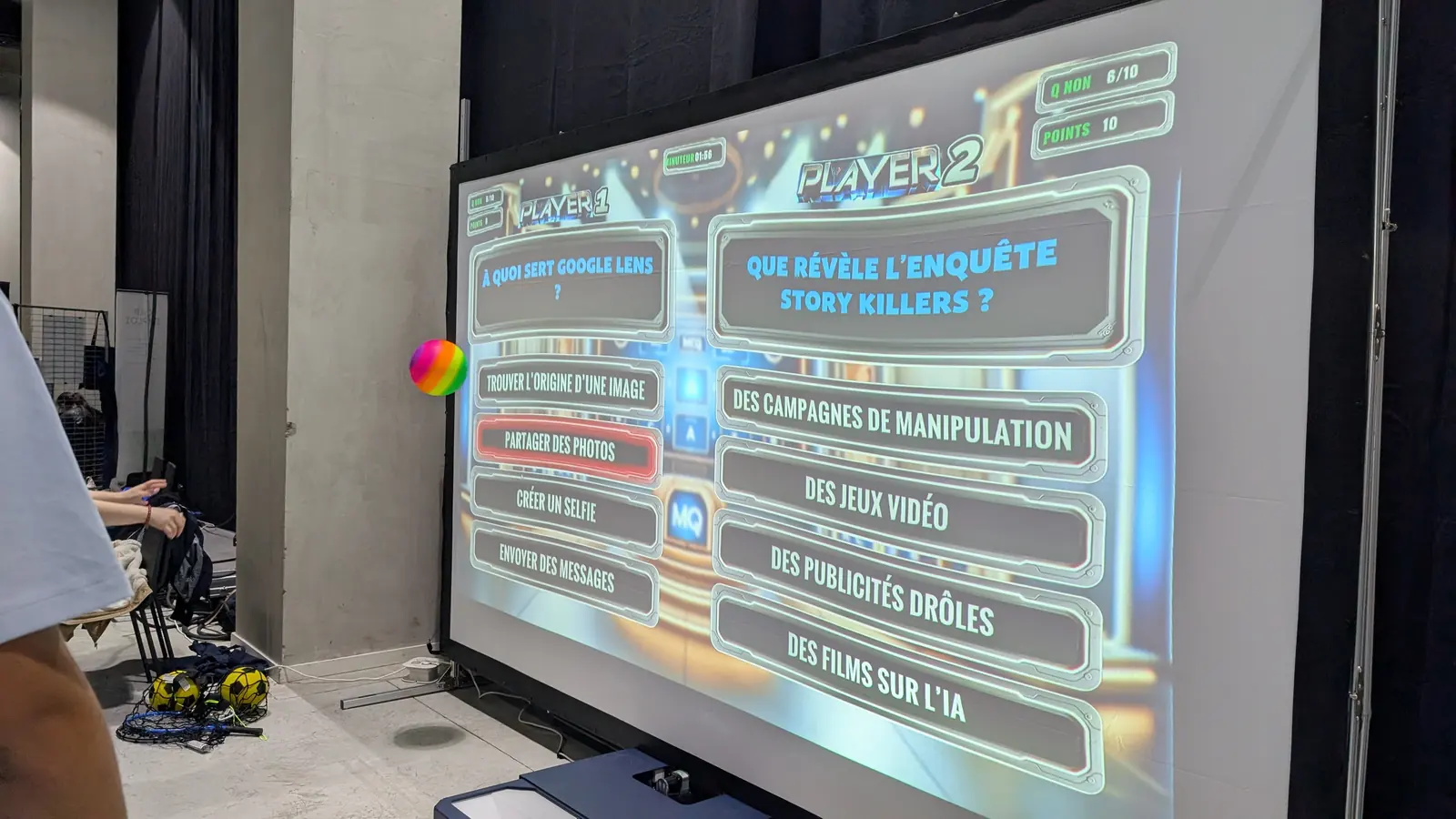
In rehabilitation, in-patient care or follow-up care, the interactive wall gives patients a reason to move again. The body is all that's needed to play, with no controller and no headset. Care teams adjust difficulty and target size to each patient's profile.
In hospital wards, follow-up care or rehabilitation units, the interactive wall gives patients a reason to move. The body is enough to play, with no controller and no connected device. Care staff adjust the difficulty and target size to match each patient's profile.
What it changes day to day
Accessible in bed and in a chair
Playful rehabilitation
Therapeutic distraction
Nothing to lose
How teams use the wall
- Functional rehabilitation sessions in follow-up care
- Therapeutic distraction in paediatric or adult wards
- Gentle physical activation in long-term care
- Interdisciplinary sessions with physiotherapy, occupational therapy and motor skills teams
Real deployments
In hospitals and rehabilitation care, the interactive wall serves two goals at once: getting the patient moving again and reducing the anxiety linked to care.
Regaining balance and support after a hospital stay
Rehabilitation and follow-up care unit, 40 beds
Balance and weight-transfer exercises were carried out in the physiotherapy room, with patients quickly growing tired of repetitive series.
A K-Station installed in the rehabilitation room, used at the end of a session by the physiotherapist to turn the prescribed exercise into a target game.
- Longer series for the same perceived effort
- Range and speed adjustable patient by patient
- Session durations visible on screen, reusable in the patient's file
Easing the wait and reducing anxiety before an exam
Paediatric ward and imaging waiting room
Waiting before an exam caused anxiety in children and complicated preparation for the care team.
A K-Mobile moved between the waiting room and the ward, with two-minute games launched by reception staff.
- Waiting time turned into an activity instead of a source of tension
- Immediate use by non-clinical staff
- No controller or accessory to disinfect individually
What interests me is that the patient forgets they are working on their balance. They play, they aim, they move, and they complete the whole series when they would have stopped a classic exercise. The therapeutic instruction stays the same, but the relationship to effort changes completely.
We also use it as a buffer before an exam. Children arrive stressed, they play for three minutes, and they go into the room much calmer. For the team, it changes how the session starts.
Products that fit this environment
Questions we hear from teams like yours
- Can the system be used in bed or in a wheelchair?
- Yes. The playing surface projects at the desired height and targets resize accordingly. A bedridden or seated patient can play with an arm or hand movement.
- Which healthcare professionals can run sessions?
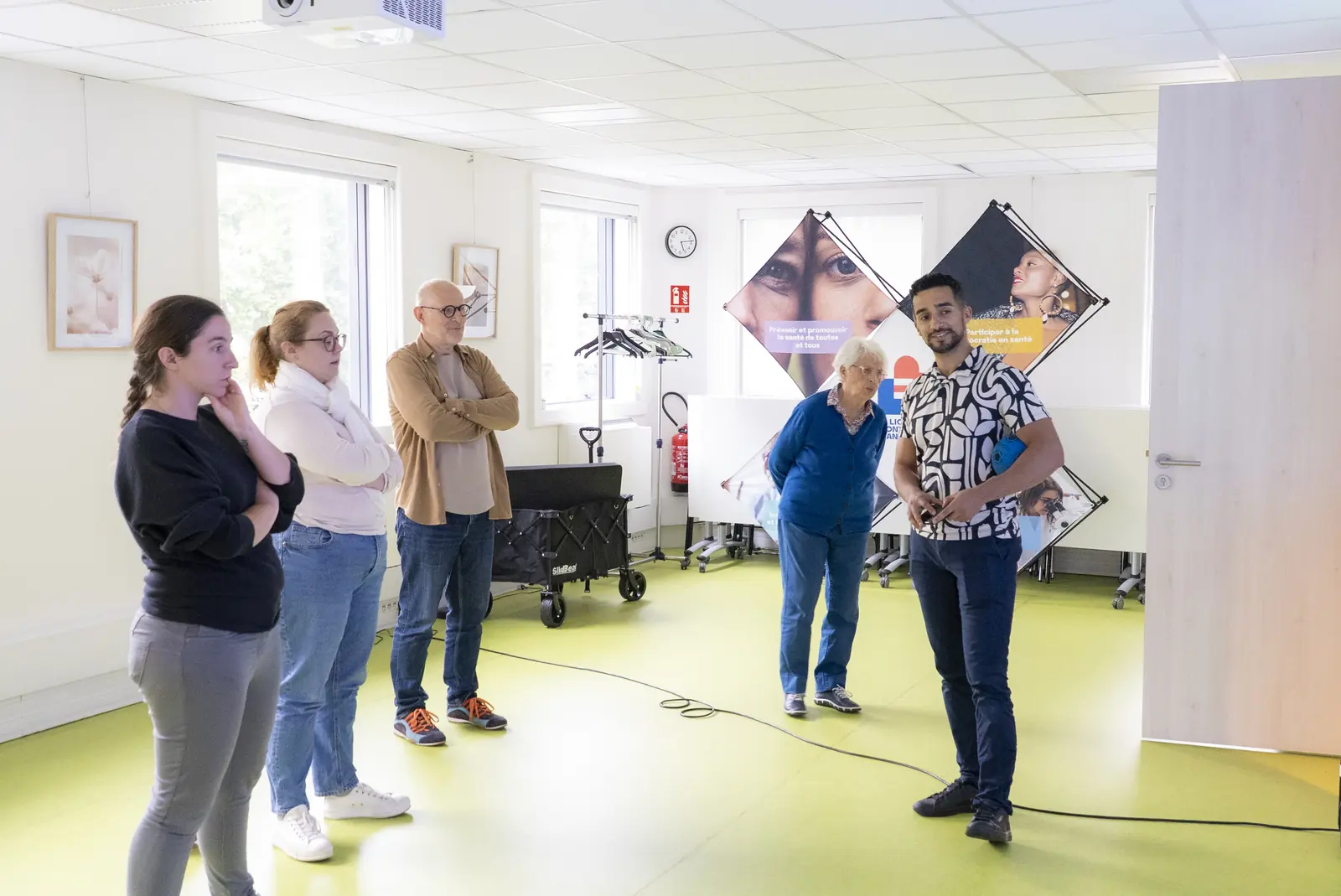
- Physiotherapists, occupational therapists, motor skills specialists, care staff or activity coordinators: getting started takes a few minutes. Protocols can be replayed identically from one session to the next.
- Does the interactive wall respect patient confidentiality?
- Yes. In its standard configuration, the laser sensor does not film: it detects positions and movement on the surface without recording any image. The optional K-motion camera, offered separately, only activates if you choose it and never records video.
- Is the interactive wall a medical device?
- No. Kmoove is not a medical device and makes no therapeutic claims. It is an activity and adapted physical activity tool, used under the responsibility of professionals (physiotherapists, occupational therapists, adapted physical activity instructors) as part of their own protocols.
- How are the balls and the unit disinfected?
- The foam balls and the unit's surfaces are cleaned with the wipes or disinfectant solutions already used in the facility, unplugged and without abrasive products. No sensor touches the patient: the laser and the projector stay at a distance from the wall.
- How much space does it take in a physiotherapy room?
- It needs a light-coloured wall two to four metres wide, a power outlet and about two metres of clearance in front of the wall so the patient can play standing, seated or in a wheelchair. The K-Station stays fixed to the wall or on a frame; the K-Mobile is put away after the session.
Tell us about your facility
Send us your room size, your audience and your timeline. We reply with a detailed quote within 48 hours.